
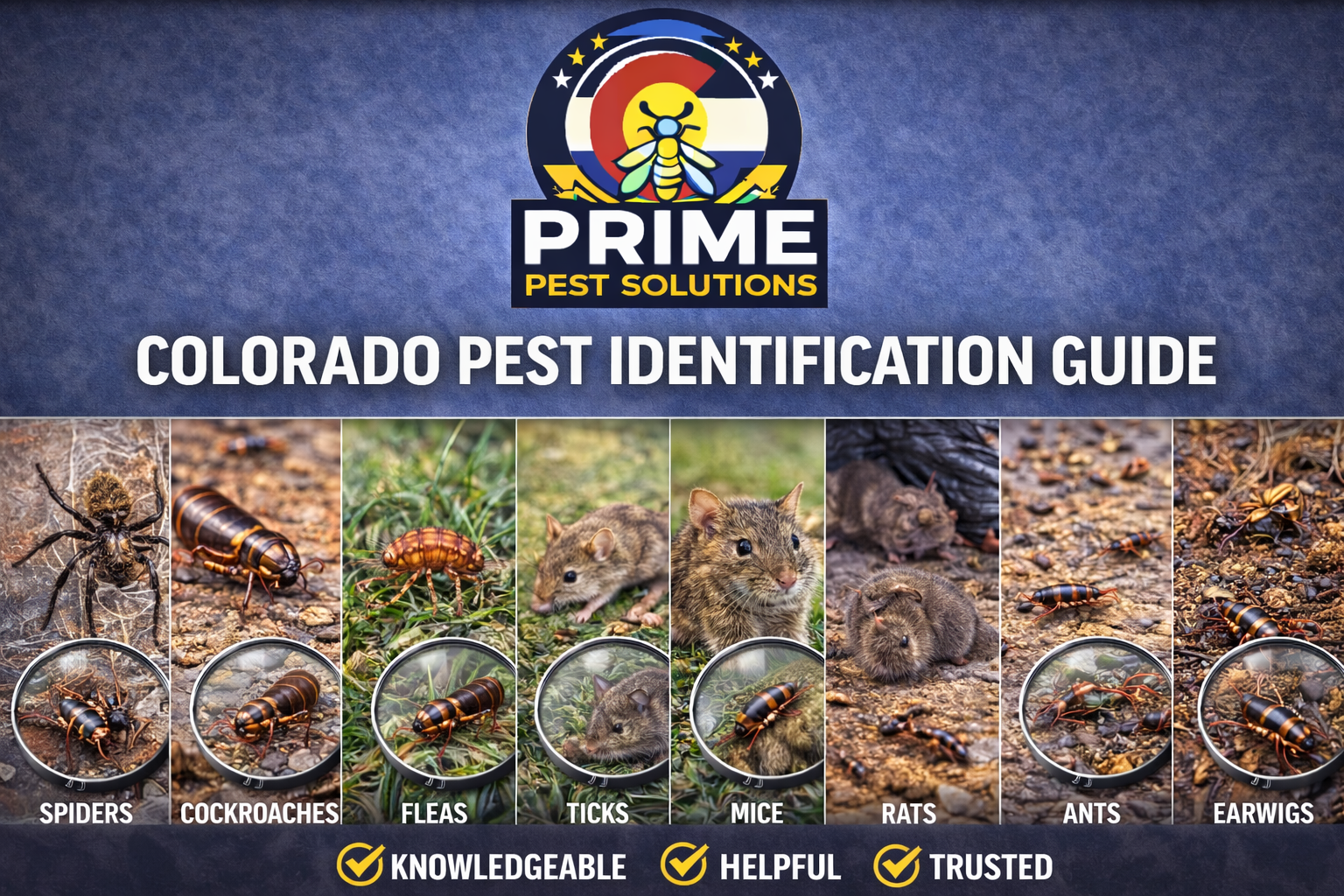
Colorado Pest Identification Guide
If you are seeing insects, spiders, or rodents around your home or business, the first step to solving the problem is correctly identifying the pest. This Colorado Pest Identification Guide helps homeowners and property managers recognize the most common pests found in Northern Colorado, including ants, spiders, rodents, wasps, yellow jackets, and other nuisance pests.
Our technicians regularly help customers identify pest problems throughout Fort Collins, Loveland, Windsor, Greeley, Longmont, and surrounding Northern Colorado communities. Many pest problems begin outdoors near foundations, landscape beds, garages, patios, and entry points before eventually moving inside.
Whether you are searching for "what bug is this in Colorado", "common pests in Northern Colorado", or "how to identify pests in my house", this guide will help you recognize the signs and connect you to the correct treatment page.
Why Pest Identification Matters
Different pests behave differently. Some pests are mostly a nuisance, while others can contaminate food, damage wood, create stinging risks, or spread bacteria. A pest that looks harmless at first can point to a bigger issue such as moisture buildup, structural gaps, food access, or exterior harborage pressure.
Our goal with this page is simple: help you quickly identify what you may be seeing, understand common signs of activity, and connect you to the right treatment page for more detail.
What this guide helps with
- Identifying common Colorado pests
- Recognizing signs of infestation
- Understanding likely hiding areas
- Knowing when professional treatment is needed
Common places pests are found
- Kitchens and pantries
- Basements and crawlspaces
- Garages and storage rooms
- Attics and wall voids
- Patios, porches, and foundations
- Bathrooms and laundry rooms
Ants in Colorado
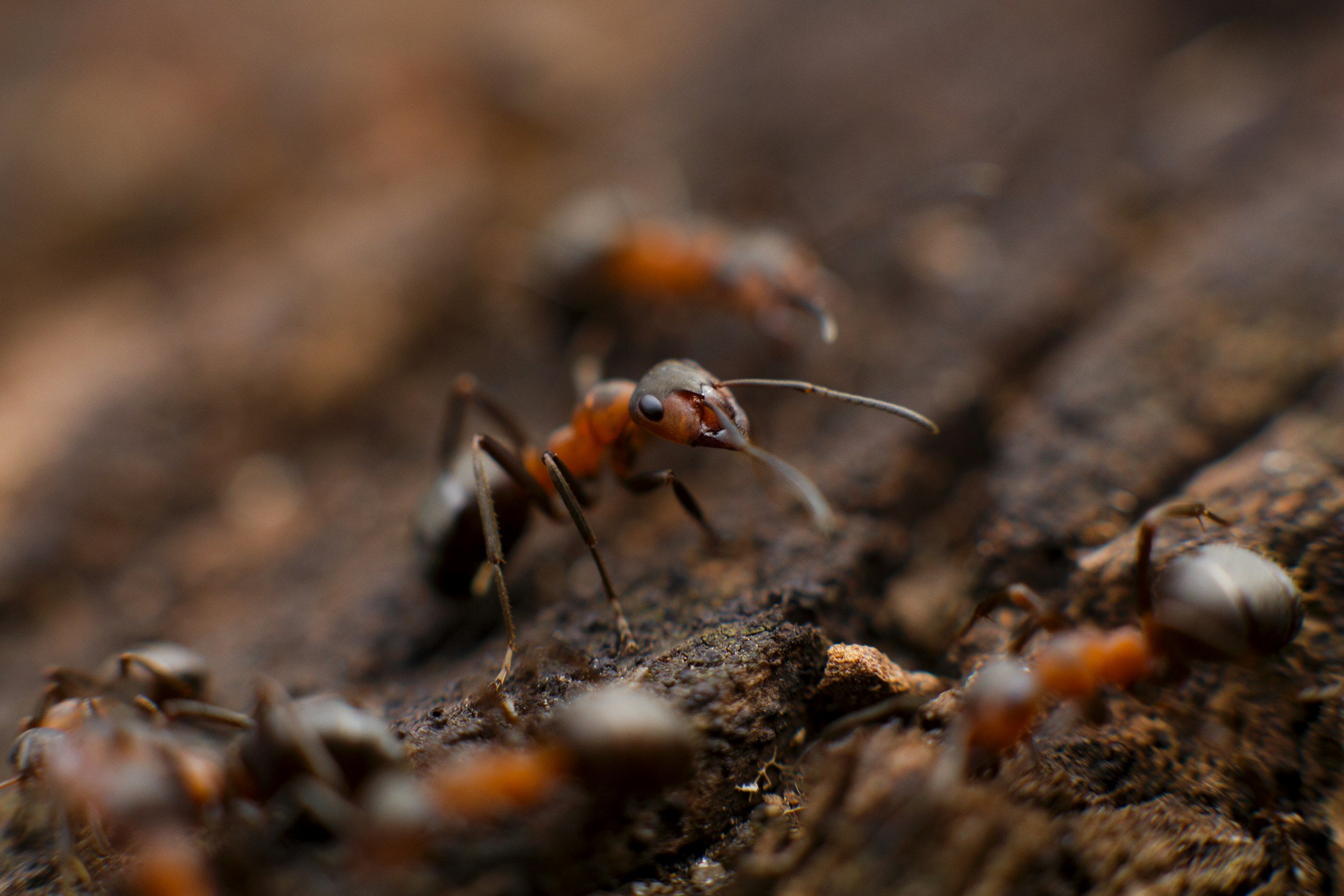
Ants are one of the most common pests in Colorado homes and commercial buildings. Some ants are mainly a nuisance around kitchens and food areas, while others can nest in structural voids or damaged wood. Ant infestations often start outside and expand inward when food, moisture, or entry points are available.
Common ants found in Colorado
- Odorous house ants
- Pavement ants
- Carpenter ants
- Field ants
Signs of ant activity
- Visible ant trails along walls, counters, or floors
- Ant activity around sinks, food, or pet bowls
- Small piles of soil near cracks or edges
- Repeated sightings in kitchens, bathrooms, or garages
Where ants usually hide
Ants often nest near foundations, expansion joints, mulch beds, wall voids, kitchens, and moisture-prone interior spaces.
Visit Ant Control PageSpiders in Colorado
Spiders are common in Colorado and are frequently found in garages, basements, storage rooms, utility spaces, and quiet corners of the home. Most spiders are nuisance pests, but some species can create greater concern when found indoors regularly or in sensitive areas around children, pets, or work spaces.
Common spiders found in Colorado
- Black widow spiders
- Wolf spiders
- House spiders
- Hobo spiders
Signs of spider activity
- Webs in corners, ceiling edges, or lower-level rooms
- Egg sacs in storage areas or behind objects
- Frequent spider sightings indoors
- Spider activity in garages, basements, and utility rooms
Where spiders usually hide
Spiders often stay in low-traffic areas with clutter, darkness, insect prey, and protected corners.
Visit Spider Control PageRodents in Colorado
Rodents are among the most serious pest problems for homes and businesses because they contaminate food, damage insulation, chew wiring, and create sanitation concerns. Rodent problems can build in attics, crawlspaces, garages, wall voids, utility areas, and around stored materials.
Common rodents found in Colorado
- House mice
- Deer mice
- Norway rats
- Roof rats
Signs of rodent activity
- Droppings near food, cabinets, or stored items
- Scratching sounds in walls, ceilings, or attics
- Gnaw marks on wiring, boxes, or wood
- Nests made from insulation, paper, or fabric
Where rodents usually hide
Rodents often stay in attics, crawlspaces, garages, basements, utility rooms, storage zones, and hidden structural voids.
Visit Rodent Control PageWasps and Yellow Jackets
Wasps and yellow jackets become a bigger concern during the warmer months in Colorado. These pests can be aggressive, especially when nests are disturbed. Stinging insect activity is often most noticeable around rooflines, soffits, decks, sheds, play areas, patios, trash zones, and exterior eating spaces.
Common stinging pests in Colorado
- Yellow jackets
- Paper wasps
- Bald-faced hornets
- Other wasp species around structures
Signs of wasp or yellow jacket activity
- Visible nests under eaves, soffits, or decks
- Repeated flying in and out of the same area
- Increased stinging insect activity near food or trash
- Wasps gathering near doors, windows, or roof edges
Where nests are commonly found
Nests are often found under rooflines, in soffits, around decks, sheds, fence lines, and concealed wall or ground areas.
Visit Wasp Control PageCommon Household Pests in Colorado
Many smaller pests can show up inside Colorado homes even when they are not the main pest problem. These insects often appear in bathrooms, basements, garages, kitchens, utility rooms, and near moist or cluttered areas. While some are mostly nuisance pests, repeated sightings can still point to underlying moisture, harborage, or structural access issues.
Earwigs
Often found around mulch, patios, garages, bathrooms, and lower-level spaces.
Earwig ControlCrickets
Common in garages, basements, crawlspaces, storage areas, and utility rooms.
Cricket ControlMillipedes
Usually tied to damp exterior zones, foundation edges, basements, and garages.
Millipede ControlBoxelder Bugs
Known for gathering on sunny siding, windows, trim, and entry points.
Boxelder Bug ControlGeneral Household Pests
Includes nuisance pests that invade kitchens, bathrooms, garages, and living spaces.
General Pest ControlPests We Commonly Identify in Northern Colorado
Prime Pest Solutions regularly helps homeowners identify pest activity across Northern Colorado. Some pests appear seasonally, while others stay active year-round depending on moisture, shelter, food access, and outdoor conditions around the structure.
Ants
One of the most common pests in Colorado homes. Ant colonies often build around foundations, landscape beds, patios, and kitchens.
Spiders
Frequently found in basements, garages, storage rooms, and quiet areas where insects are present.
Rodents
Mice and rats often enter homes through small exterior gaps and commonly nest in attics, wall voids, and crawlspaces.
Stinging Insects
Wasps and yellow jackets often build nests around rooflines, decks, sheds, and other protected outdoor areas.
When to Call a Professional Pest Control Company
You should consider professional pest control when sightings become frequent, activity is spreading, pests are showing up in multiple rooms, or the problem involves rodents, stinging insects, or persistent indoor migration from exterior areas.
- Repeated sightings – The same pest keeps showing up over and over.
- Signs of infestation – Droppings, nests, trails, webs, or clusters are becoming more obvious.
- Structural or sanitation concerns – Rodents, carpenter ants, or heavy pest buildup are creating bigger risks.
- DIY methods are not working – Store-bought sprays or traps are not solving the real source of the problem.
Prime Pest Solutions uses inspection-based treatment plans to identify the pest, target the main activity areas, and help reduce the conditions that support repeat infestations.
Helpful service pages
Colorado Pest Identification FAQs
What are the most common household pests in Colorado?
Common household pests in Colorado often include ants, spiders, rodents, wasps, yellow jackets, earwigs, crickets, millipedes, and boxelder bugs.
Why is pest identification important before treatment?
Proper identification helps determine where the pest is hiding, what is attracting it, and which treatment strategy is most likely to work.
Can different pests require different treatment plans?
Yes. Ants, spiders, rodents, stinging insects, and moisture-related pests all behave differently and usually need different inspection points and control methods.
What should I do if I keep seeing pests indoors?
Repeated indoor sightings usually mean the pest has a reliable food source, moisture source, harborage area, or structural entry path. A professional inspection can help identify the cause.
Need Help Identifying a Pest?
If you are not sure what pest you are dealing with, Prime Pest Solutions can help. We provide professional pest identification and pest control services throughout Northern Colorado for homes and businesses.
Request a Pest InspectionOr call 720-442-1887 to speak with a local pest control professional.